
A Frustrating Problem That's More Common Than You Think
You press the button on your garage door remote, the door begins its descent, and then — just inches from the floor — it suddenly reverses and goes right back up. If you're a homeowner in Sammamish dealing with this issue, you're not alone. This is one of the most common garage door complaints we hear, especially as the seasons change and temperatures shift across the Pacific Northwest.
The good news is that a reversing garage door doesn't always mean something is seriously wrong. In many cases, the fix is straightforward. But understanding why it's happening is the first step toward getting your garage door working reliably again.
How Your Garage Door's Safety System Works
Before diving into the causes, it helps to understand the basic safety mechanisms built into every modern garage door opener. Federal law has required two key safety features on all residential garage door openers manufactured since 1993:
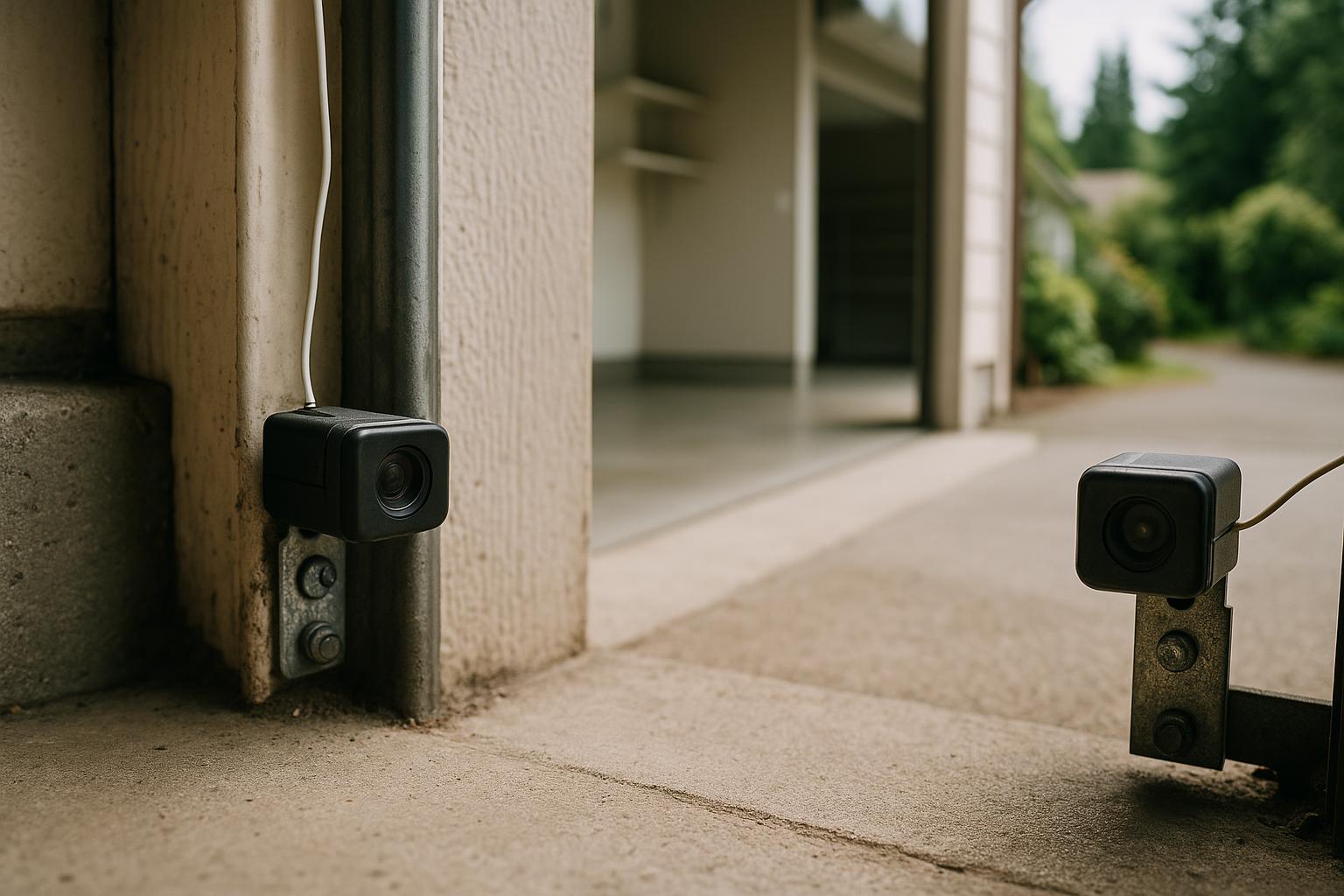
- Photo-eye sensors: These are the small sensors mounted on either side of your garage door near the floor. They project an invisible beam across the opening. If anything breaks that beam while the door is closing, the door automatically reverses.
- Auto-reverse mechanism: If the door encounters physical resistance while closing — like hitting an object or the floor with too much force — it reverses direction to prevent injury or damage.
Both of these systems are essential for safety, but when they malfunction or are triggered incorrectly, they cause the door to reverse when it shouldn't.
Common Reasons Your Garage Door Reverses Early
1. Misaligned Photo-Eye Sensors
This is the number one culprit. The photo-eye sensors on either side of your garage door frame need to be precisely aligned to maintain their infrared beam. Over time, they can get bumped by a bicycle, lawn equipment, or even vibrations from the door itself. When the sensors are misaligned, your opener interprets the broken beam as an obstruction and reverses the door.
Check the indicator lights on both sensors. Most models show a steady green light on the sending sensor and a steady green or amber light on the receiving sensor. If one light is blinking, the sensors are likely out of alignment. Gently adjust the sensor until the light becomes steady.
2. Dirty or Obstructed Sensor Lenses
Living in the Sammamish area means dealing with moisture, dust, cobwebs, and seasonal debris that can accumulate on your sensor lenses. Even a thin film of grime can weaken the beam enough to cause intermittent reversing. Wipe the lenses with a soft cloth and see if the problem resolves.
3. Incorrect Close-Force or Travel-Limit Settings
Your garage door opener has adjustable settings that control how far the door travels and how much force it uses during opening and closing. If the close-force setting is too low, the door may interpret normal contact with the ground as an obstruction and reverse. Similarly, if the down travel limit is set incorrectly, the opener may think the door has hit something before it reaches the floor.
These settings are typically adjusted using small dials or screws on the back or side of the opener unit. Your owner's manual will have specific instructions, but if you're unsure, it's best to have a technician handle the adjustment to avoid creating new problems.
4. Worn or Damaged Rollers and Tracks
When rollers become worn, cracked, or clogged with debris, they create extra friction as the door moves along the tracks. Bent or misaligned tracks cause similar resistance. Your opener senses this added friction as an obstruction and triggers the auto-reverse. Inspect your tracks for visible bends, dents, or buildup, and check that the rollers spin freely.
5. Broken or Weakening Springs
Garage door springs bear the majority of the door's weight. When a spring begins to weaken or partially breaks, the opener motor has to work much harder to move the door. This extra strain can trigger the auto-reverse mechanism because the opener detects more resistance than expected. If you notice your door seems heavier than usual or the opener is straining, a spring issue may be the root cause.
Important: Garage door springs are under extreme tension and should only be repaired or replaced by a trained professional. Attempting a DIY spring repair is one of the most dangerous home maintenance tasks you can undertake.
6. Wiring Issues
Frayed, pinched, or damaged wiring between the opener and the sensors can send erratic signals that cause unpredictable behavior, including random reversing. Rodents sometimes chew through wiring in garages, and exposure to moisture over the years can corrode connections. If you've ruled out other causes, a wiring inspection may be in order.
Troubleshooting Steps You Can Try at Home
- Clean both photo-eye sensor lenses with a soft, dry cloth.
- Check that both sensor lights are steady and not blinking.
- Gently realign the sensors if one appears tilted or shifted.
- Remove any objects near the sensors or in the door's path.
- Visually inspect the tracks for debris, dents, or obstructions.
- Listen for unusual grinding or scraping sounds during operation.
- Consult your opener's manual for close-force and travel-limit adjustment instructions.
If none of these steps resolve the issue, the problem likely requires professional diagnosis and repair.
When to Call a Professional
While some causes of a reversing garage door are easy to fix, others require specialized tools and expertise. You should contact a garage door technician if:
- The door reverses and you cannot identify any visible cause
- You suspect a spring is broken or weakening
- The tracks are visibly bent or damaged
- The opener motor is making unusual sounds or running hot
- You've adjusted settings but the problem persists
- There are signs of damaged or corroded wiring
At Sammamish Door & Opener, we see reversing door issues regularly across Sammamish, Issaquah, Redmond, and the surrounding Eastside communities. In most cases, we can diagnose and resolve the problem in a single visit. Our technicians will identify the exact cause, explain your options clearly, and provide honest pricing before any work begins.
Don't Ignore a Reversing Garage Door
It might be tempting to just keep pressing the button until the door finally stays down, but ignoring a reversing garage door can lead to bigger problems. You could be putting extra strain on your opener motor, wearing out components faster, or — worst case — compromising the safety features that protect your family. A small repair now can prevent a much more expensive replacement later.
If your garage door has been giving you trouble, give us a call or schedule a service appointment. We're here to help homeowners throughout Sammamish and the Eastside keep their garage doors running safely and smoothly, no matter what's causing the issue.