
Your Garage Door Shouldn't Sound Like That
You press the button on your garage door opener, and instead of the smooth, quiet hum you're used to, you hear something unsettling — a loud grinding, a sharp squeal, or a rhythmic banging that makes you wince every time. If this sounds familiar, you're not alone. Noisy garage doors are one of the most common complaints we hear from homeowners in Sammamish, and for good reason: those sounds are almost always a sign that something needs attention.
The good news is that most garage door noises have identifiable causes, and many of them can be resolved before they turn into expensive repairs. In this guide, we'll walk you through the most common garage door sounds, what's likely causing them, and what you should do about each one.
Grinding or Scraping Sounds
A grinding or scraping noise when your garage door opens or closes is one of the more alarming sounds you might hear. This type of noise usually points to one of a few issues:
- Worn or misaligned rollers: Over time, the rollers that guide your door along the tracks can wear down, especially if they're made of steel rather than nylon. When the rollers deteriorate, they create friction against the track, producing that unmistakable grinding sound.
- Track misalignment: If the vertical or horizontal tracks have shifted even slightly, the door panels can scrape against the metal as they move. This not only creates noise but can also cause uneven wear on your door.
- Opener gear issues: In belt-drive and chain-drive openers, internal gears can strip or wear down over time. A grinding noise coming from the opener unit itself — rather than the door — often signals a gear that needs replacement.
If you notice grinding, it's worth having a professional inspect the system sooner rather than later. Ignoring it can lead to further damage to the tracks, panels, or opener mechanism.
Squealing or Squeaking
A high-pitched squeal or squeak is perhaps the most common garage door noise, and fortunately, it's often one of the easiest to address. Common causes include:
- Lack of lubrication: Your garage door has numerous moving parts — hinges, rollers, springs, and bearings — that all require periodic lubrication. When these parts dry out, metal-on-metal contact creates squealing sounds. This is especially common during the cooler, drier months we experience here in the Pacific Northwest.
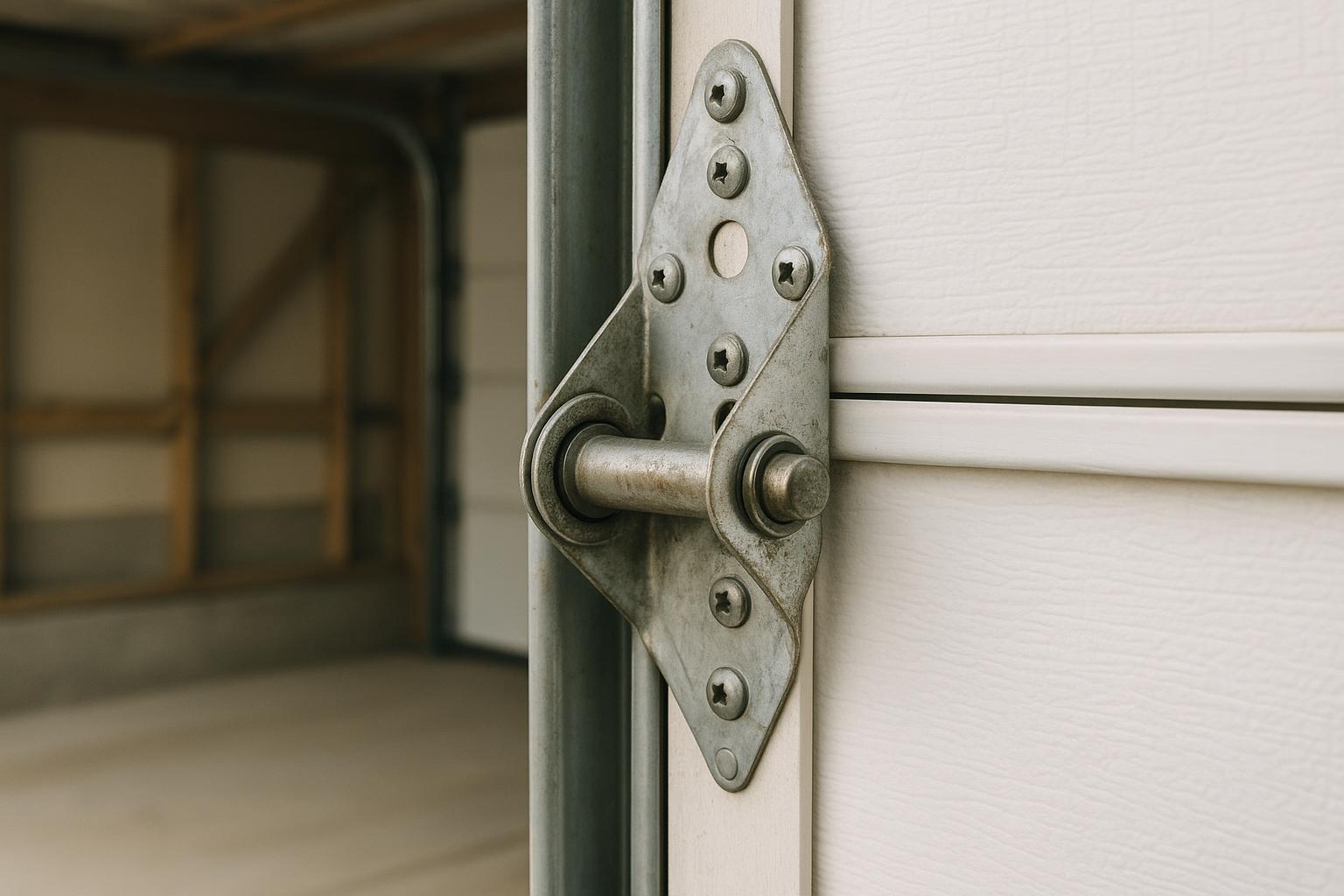
- Worn hinges: The hinges that connect each panel of your garage door can wear over time, developing play that causes squeaking during operation.
- Torsion spring friction: As torsion springs coil and uncoil, they can produce squeaking if they haven't been properly lubricated.
A Quick DIY Fix
For squeaking caused by dry components, you can often solve the problem yourself with a garage door-specific lubricant or white lithium grease. Apply it to the rollers, hinges, spring coils, and bearing plates. Avoid using WD-40 as a long-term lubricant — while it's great for loosening stuck parts, it doesn't provide lasting lubrication and can actually attract dust and grime.
Rattling or Vibrating
A rattling or vibrating noise during operation often indicates loose hardware. Your garage door cycles up and down hundreds of times a year, and that constant movement can gradually loosen nuts, bolts, and screws throughout the system. Here's what to check:
- Loose track brackets: The brackets that secure the tracks to the wall and ceiling can vibrate loose over time.
- Loose chain or belt: If your opener uses a chain drive, a chain that's too loose will slap and rattle during operation. Belt-drive openers can develop similar issues if the belt loses tension.
- Worn opener mounting: If the opener unit itself isn't securely fastened to the ceiling, the vibration from the motor can amplify into a noticeable rattle throughout your garage.
Tightening loose hardware is a relatively simple maintenance task, but be cautious around the spring system and cables — those components are under significant tension and should only be handled by a trained technician.
Banging or Popping Sounds
A sudden bang or pop when your garage door moves can be startling. These sounds are often related to:
- Panel flex: If your door panels are warped, bent, or aging, they may flex and pop as they transition between the vertical and curved sections of the track.
- Spring tension issues: Torsion springs that are improperly balanced or nearing the end of their lifespan can produce popping sounds as they struggle to manage the door's weight evenly.
- Temperature-related expansion: In Sammamish, where temperatures can swing between seasons, metal components expand and contract. This thermal movement can occasionally produce popping or clicking sounds, especially first thing in the morning.
While occasional popping due to temperature changes is generally harmless, repeated banging during every cycle warrants a professional inspection to rule out structural or balance issues.
Continuous Humming From the Opener
If your garage door opener hums or buzzes but the door doesn't move, the motor is running but failing to engage the drive mechanism. This can happen when:
- The drive gear is stripped: The main drive gear inside the opener can wear out, especially in older units, leaving the motor spinning without moving the door.
- The door is stuck or obstructed: If something is preventing the door from moving — a broken spring, a locked manual latch, or debris in the tracks — the motor will hum as it tries and fails to lift the weight.
- Electrical issues: A capacitor that's going bad can cause the motor to hum without generating enough power to operate.
In any of these cases, continuing to press the button repeatedly can burn out the motor. If the opener hums but the door won't budge, stop trying to operate it and call for service.
When to Call a Professional
Some noises, like minor squeaking, can be resolved with a can of lubricant and a few minutes of your time. But many garage door sounds point to issues that require professional diagnosis and repair. As a general rule, call a technician if:
- The noise is new and sudden
- The noise is accompanied by the door moving unevenly or getting stuck
- You suspect the issue involves springs, cables, or the opener's internal components
- Lubricating the moving parts doesn't resolve the problem
At Sammamish Door & Opener, we help homeowners across Sammamish, Issaquah, Redmond, and the surrounding Eastside communities diagnose and fix noisy garage doors every day. Whether it's a simple lubrication service or a full roller and hinge replacement, we provide honest assessments and upfront pricing so you know exactly what you're paying for.
Preventive Maintenance Keeps Things Quiet
The best way to prevent your garage door from developing alarming noises is regular maintenance. We recommend having your garage door professionally serviced at least once a year. During a maintenance visit, a technician will lubricate all moving parts, tighten hardware, inspect the springs and cables, test the balance and safety features, and identify small issues before they become big — and loud — problems.
If your garage door has been making sounds that don't seem right, don't wait for a small issue to become a major repair. Give us a call or schedule a service appointment online. We'll get your door running smoothly and quietly again.