
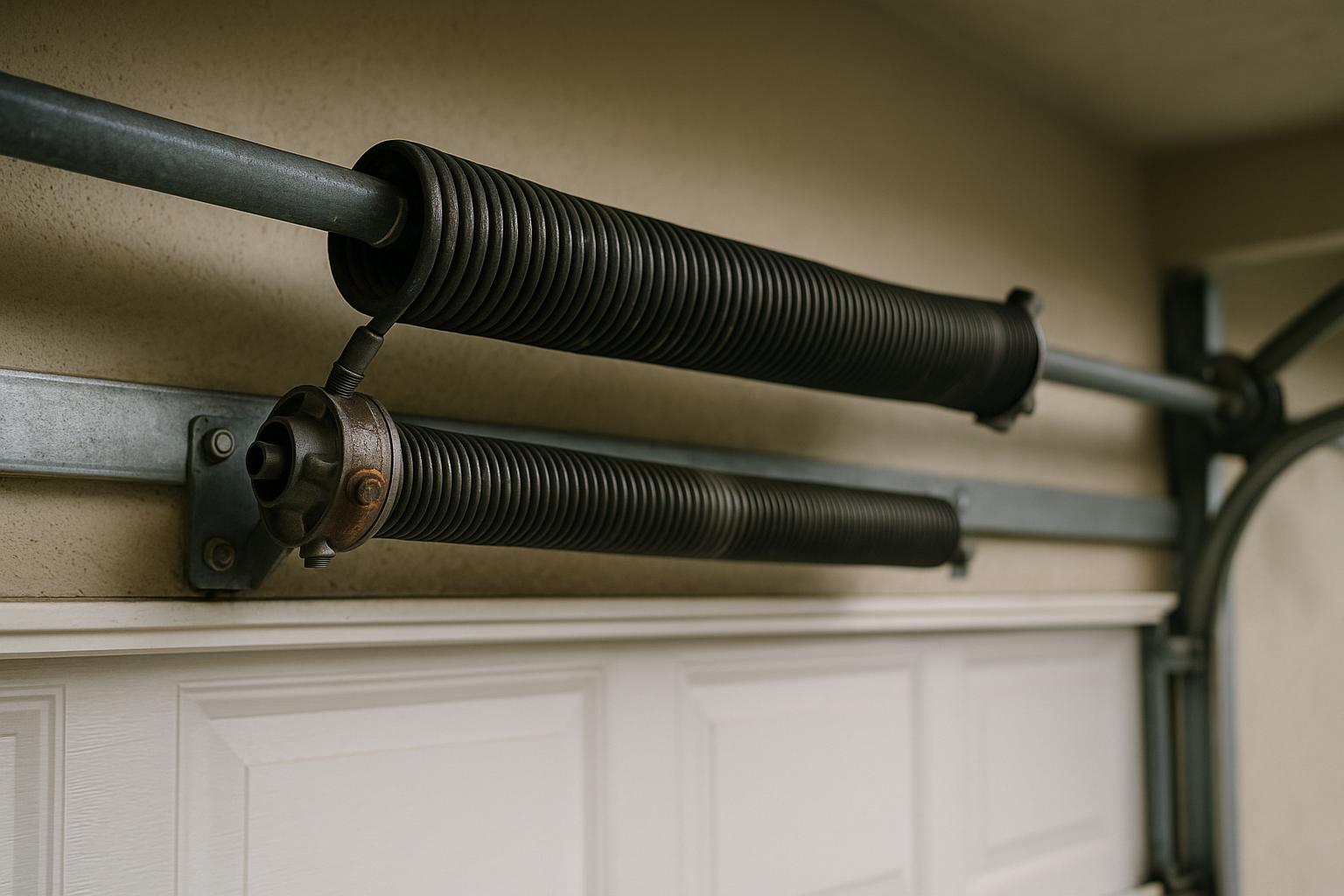
Your Garage Door Springs Are Doing More Work Than You Think
Every time you open or close your garage door, the springs are doing the heavy lifting — literally. A standard two-car garage door can weigh between 150 and 250 pounds, and it's the springs that counterbalance all that weight so your opener doesn't have to muscle the door up on its own. Without functioning springs, your garage door is essentially a giant slab of dead weight hanging above your driveway.
For homeowners in Sammamish, where the garage often serves as the primary entry point to the home, a sudden spring failure isn't just an inconvenience — it can leave you locked out or trapped inside. Understanding the lifespan of your springs and knowing when to replace them can save you from an unexpected breakdown on a cold, rainy morning.
How Long Do Garage Door Springs Last?
Most garage door springs are rated by cycle life, with one cycle being a single open-and-close of the door. Here's what you can generally expect:
- Standard torsion springs: 10,000 cycles, which translates to roughly 7–10 years for the average household that opens the door 3–4 times per day.
- High-cycle torsion springs: 20,000–30,000 cycles or more, lasting 15–20 years depending on usage.
- Extension springs: Typically 10,000 cycles, though they tend to wear less evenly than torsion springs and may need attention sooner.
These are general estimates. Several factors specific to our area can shorten or extend the life of your springs.
Factors That Affect Spring Lifespan in the Pacific Northwest
Moisture and Corrosion
Sammamish and the surrounding Eastside communities experience significant rainfall and humidity, especially from fall through spring. That moisture can accelerate rust and corrosion on uncoated springs, weakening the metal over time. If your garage isn't insulated or well-sealed, your springs are exposed to damp air year-round.
Temperature Fluctuations
While we don't experience extreme cold like other parts of the country, our winter temperatures do dip enough to affect spring tension. Metal contracts in cold weather, which puts additional stress on aging springs. If your garage door feels heavier or sluggish on cold mornings, your springs may be losing their tension.
Frequency of Use
Think about how often you actually use your garage door. Families with multiple drivers, home-based businesses, or anyone who uses the garage as a primary entrance may cycle the door 6–8 times per day or more. At that rate, a standard 10,000-cycle spring could wear out in as few as 4–5 years.
Maintenance History
Springs that are regularly lubricated and inspected will last longer than those that are neglected. A thin coat of garage door lubricant applied twice a year can reduce friction, prevent rust, and help the springs maintain their elasticity.
Warning Signs Your Springs Are Wearing Out
Spring failure doesn't always happen without warning. Here are the signs you should watch for:
- The door feels unusually heavy when you try to lift it manually. If you disconnect the opener and the door won't stay open on its own, the springs are losing their counterbalance.
- Visible gaps in the spring coils. Torsion springs that are stretched or have gaps between coils are nearing the end of their life.
- Rust or corrosion on the spring surface. Rusty springs are weaker and more prone to snapping.
- The door opens unevenly or appears crooked. This can indicate that one spring has weakened more than the other, especially in two-spring systems.
- Loud bang from the garage. If you heard a loud noise that sounded like a firecracker, a spring may have already broken. Check the torsion bar above the door for a visible break in the coil.
- The opener struggles or strains to lift the door. When springs lose tension, the opener compensates by working harder, which can burn out the motor prematurely.
Can You Replace Garage Door Springs Yourself?
This is one of the most common questions we hear, and the answer is straightforward: we strongly advise against DIY spring replacement. Garage door springs are under extreme tension. A torsion spring that snaps or is improperly wound during installation can cause serious injury or even death. Every year, emergency rooms across the country treat injuries related to garage door spring accidents.
Professional technicians have the specialized tools, training, and experience to safely remove old springs and install new ones. The job typically takes less than an hour for an experienced team, and the peace of mind is worth every penny.
Should You Replace One Spring or Both?
If your garage door uses a two-spring system and one spring breaks, we almost always recommend replacing both springs at the same time. Here's why:
- Matched wear: If one spring has reached the end of its cycle life, the other one is likely close behind. Replacing both ensures even tension and balanced door operation.
- Cost efficiency: The labor involved in replacing springs is the same whether you're doing one or two. Replacing both now saves you from paying for a second service call in a few months.
- Reduced risk: Running a new spring alongside a worn spring puts uneven stress on the door, the tracks, and the opener, potentially causing additional problems.
Proactive Replacement vs. Waiting for Failure
Many homeowners wait until a spring breaks before calling for service, but there's a strong case for proactive replacement. A broken spring means your garage door is out of commission until a technician can get to you. If it happens on a weekend, a holiday, or during a busy season, you could be waiting longer than you'd like.
If your springs are approaching the 7–10 year mark and you're noticing any of the warning signs mentioned above, scheduling a replacement on your terms is far more convenient than dealing with an emergency. At Sammamish Door & Opener, we help homeowners throughout Sammamish, Issaquah, Redmond, and the broader Eastside plan ahead so they're never caught off guard.
What to Expect During a Spring Replacement
When you call us for a spring replacement, here's what the process looks like:
- We inspect the entire door system — springs, cables, rollers, hinges, and tracks — to identify any additional issues.
- We recommend the right spring type and cycle rating based on your door's weight and your usage patterns.
- We safely remove the old springs and install the new ones, ensuring proper tension and balance.
- We test the door multiple times to confirm smooth, even operation.
- We lubricate all moving parts and make any minor adjustments needed.
The whole visit typically takes about 45 minutes to an hour, and you'll notice the difference immediately in how smoothly and quietly your door operates.
Keep Your Garage Door Running Safely
Your garage door springs are one of the hardest-working components in your home, and they deserve attention before they fail. If you're unsure about the condition of your springs or you can't remember the last time they were inspected, give Sammamish Door & Opener a call. We provide honest assessments and upfront pricing to homeowners across the Eastside, and we're always happy to help you stay ahead of a problem rather than react to one.