
Short answer
If your garage door won't budge, strains against the opener, or crawls open like it's dragging something, the most common cause is the rubber seal at the bottom freezing to a wet concrete slab. But that's rarely the only thing going on — stiff lubricant, a spring that's slightly out of balance, or opener settings that haven't been touched since summer often pile on top of it. Work through the causes in order, starting with the easiest to check, before you assume you need a new opener or new springs.
What it looks like when a door is frozen or sluggish
- Door won't move at all — the opener motor runs, clicks, or hums but the door stays put.
- Door opens an inch or two, then stops or reverses — it looks like something is holding the bottom edge down.
- Door opens, but slower and jerkier than normal, sometimes with a grinding or squealing sound from the tracks.
- A loud crack or pop right as the door finally breaks free — that's the ice bond letting go.
Any of these can show up after a hard overnight freeze following a rainy day, which is exactly the pattern this part of Washington gets several times each winter: soaking rain, then a clear, cold night.
The causes, checked in the order a technician would check them
1. Ice bonding the bottom seal to the slab
This is step one because it's the most common cause and the easiest to confirm. The rubber astragal seal along the bottom of the door soaks up water during the day, then freezes solid to the concrete overnight. Forcing the opener against this bond strains the motor, the drive gear, and sometimes the door panel itself.
The fix: Never keep hitting the opener button if the door isn't moving. Pour lukewarm (not boiling) water along the seal line, or run a hair dryer along it, then gently pry the seal away from the concrete with a flat tool before trying the opener again. If this keeps happening, improving drainage right at the slab edge and keeping the seal itself in good shape will cut down on how often it bonds.
2. Spring balance
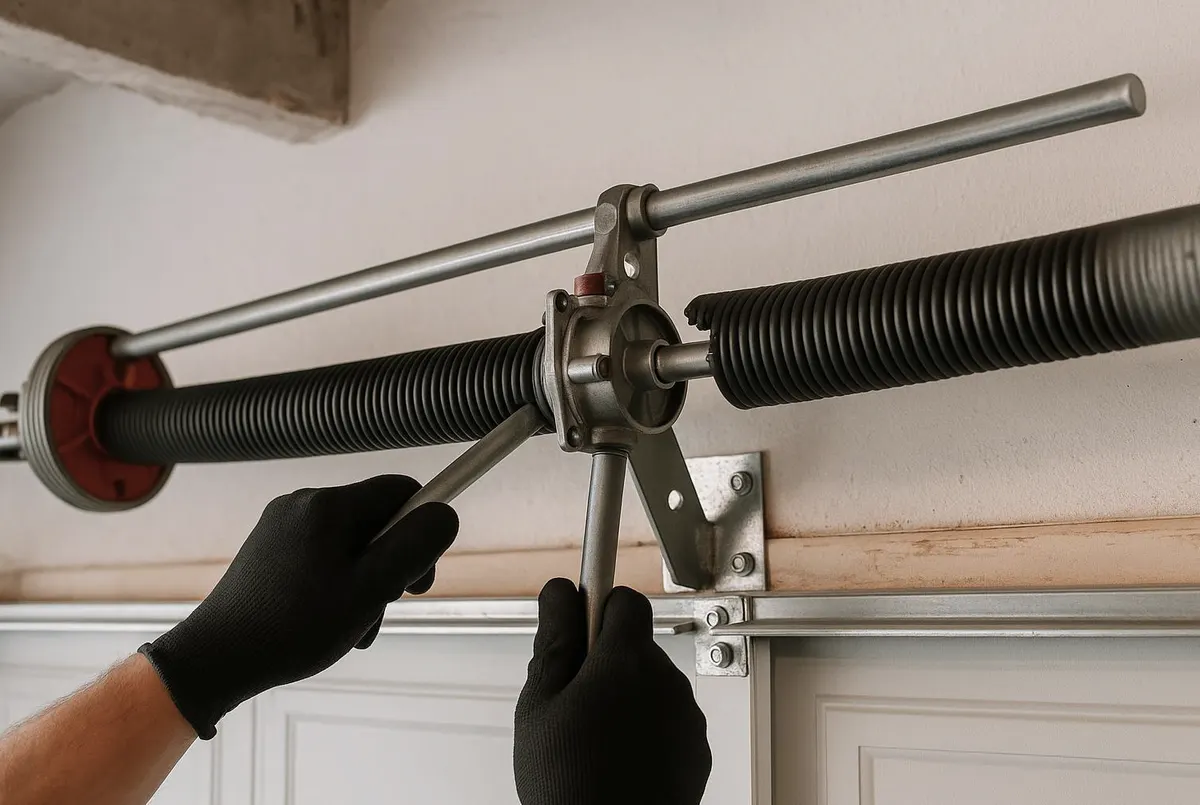
With the opener disconnected (pull the red release cord), lift the door by hand to waist height and see if it holds on its own. Cold doesn't change the steel tension in a spring much, but a damp wood door that's absorbed moisture weighs more than usual, and a spring that was already a little weak will show it first on a cold morning. If the door drops, feels heavy, or doesn't hold its position, the spring assistance is off and it's working harder than it should every time it opens.
3. Lubrication and rust on rollers, hinges, and tracks
Grease thickens in cold temperatures, and the Eastside's damp winters are hard on exposed metal hinges and rollers — rust builds up fast on hardware that doesn't get wiped down. Dry or rusted rollers drag in the track instead of rolling smoothly, which shows up as jerky, noisy movement.
The fix: Clean the tracks and rollers, then apply a silicone-based garage door lubricant (not a general-purpose oil, which can gum up when it's cold) to the rollers, hinges, and the torsion spring itself. Worn or pitted rollers should be replaced rather than just lubricated.
4. Opener force and limit settings
A door that's harder to move because of cold-stiffened seals or hardware can trip the opener's safety force settings, which read the extra resistance as an obstruction and reverse the door. Chain and belt drives can also slip slightly on a cold sprocket if tension has loosened over time.
The fix: Recalibrating the opener's force and limit settings, and checking chain or belt tension, usually resolves a door that opens partway and reverses even though nothing is actually blocking it.
5. The opener unit itself
Older openers can get sluggish in cold, damp conditions — condensation inside an unheated garage affects the circuit board and wiring connections over time, and corrosion on contacts can make the motor slow to respond. This is usually the last thing checked because it's the least common cause, but it's worth ruling out if everything else checks out fine and the door is still sluggish.
6. Brittle weatherstripping
Vinyl bottom seals get stiff and crack with age, and a cracked seal creates rough, uneven contact with the slab that's more prone to sticking than a seal in good condition. If your seal looks cracked or flattened, replacing it with cold-flex rubber weatherstripping is a quick fix.
When to call Sammamish Door & Opener
If warm water and a gentle pry don't free the door in a minute or two, if the balance test shows a heavy or drooping door, or if the opener keeps reversing even with everything lubricated, it's time to call. We'll check spring tension and handle spring replacement if it's worn out, and we can recalibrate and service the opener itself so it responds properly in cold weather instead of straining against it.
If your garage door is fighting you every cold morning, give Sammamish Door & Opener a call — we serve Sammamish and the surrounding Eastside and can get it moving smoothly again before the next freeze.